
Custom Metal Forgings: How to Specify Parts for OEM Projects
Custom metal forgings are produced to customer-specific drawings and technical requirements rather than standard stock dimensions. For OEM projects, buyers should define the material grade, heat treatment, mechanical properties, dimensions, machining and inspection requirements before production.
Buyers should also define the required delivery condition—from a forged blank to a fully machined component. When CNC machining is required, early planning of forging allowance, heat treatment, machining datums and final inspection can reduce unnecessary production handoffs.
Therefore, a well-defined custom forging project should connect the drawing, material, forging process, heat treatment, machining and inspection requirements within one manufacturing plan.
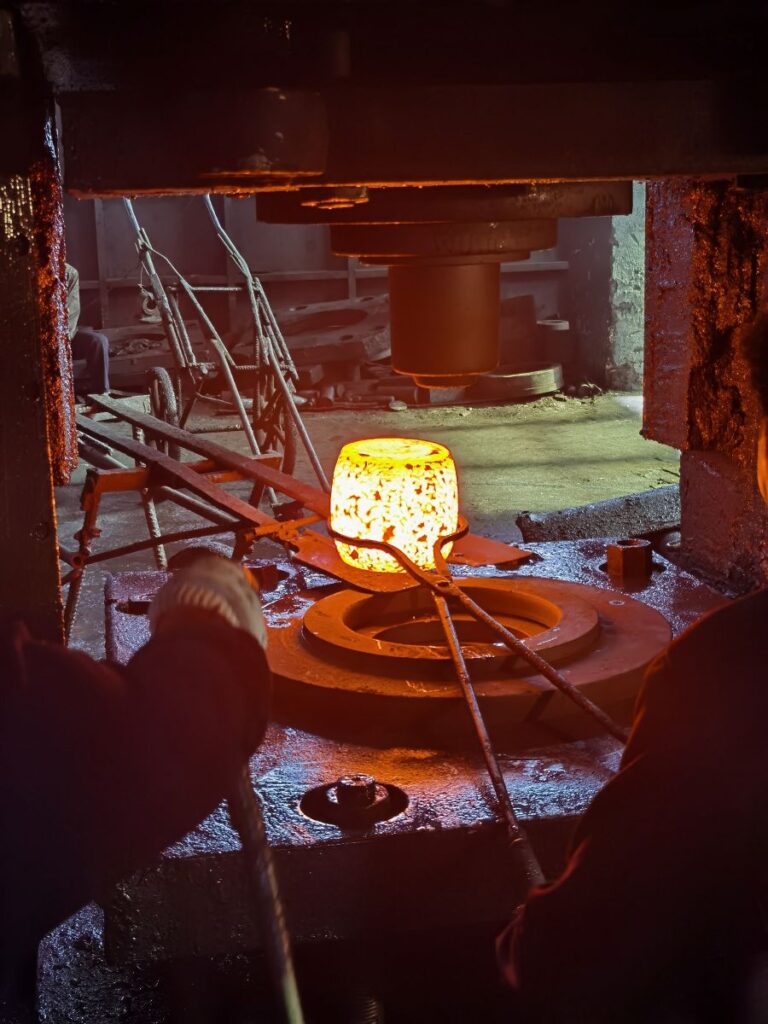
What Are Custom Metal Forgings?
A custom metal forging is defined by more than its shape. For OEM production, the drawing and specification may control:
- Material grade and standard
- Forging process
- Heat treatment
- Mechanical properties
- Machining condition
- Critical dimensions and tolerances
- NDT and inspection
- Quality documentation
Depending on the project, custom forged parts may be supplied as forged blanks, rough-machined forgings or fully machined components ready for assembly.
When Should an OEM Specify a Forged Part?
Forging is commonly considered for components exposed to high loads, cyclic stress, impact, or demanding service conditions. Controlled material deformation can produce favorable grain flow and mechanical properties, making metal forgings suitable for shafts, gears, rings, pins, couplings, and other load-bearing components.
Typical reasons to specify forging include:
- high static or cyclic loads;
- fatigue-critical service;
- impact or shock loading;
- demanding mechanical properties;
- critical components requiring defined inspection.
Forging is not automatically the best choice for every metal part. Geometry, production quantity, machining requirements, and total finished-part cost should also be considered.
Which Materials Are Used for Custom Metal Forgings?
Material selection for custom metal forgings should begin with the service requirements of the finished component rather than the forging process alone. Strength, toughness, hardenability, fatigue resistance, corrosion, operating temperature, section size, and heat treatment can all influence the appropriate material grade.
For OEM projects in the U.S. and Europe, carbon steel, alloy steel, and stainless steel are commonly specified, with grades selected according to the applicable material standard and required final properties.
Material family | Common U.S. / European grades | Key considerations | Typical OEM applications |
Carbon steel | AISI/SAE 1045; C45 / C45E | Cost, strength, machinability | Pins, shafts, general machinery parts |
Alloy steel | AISI/SAE 4140, 4340; 42CrMo4 | Strength, hardenability, toughness, fatigue performance | Gears, shafts, couplings, heavy-duty components |
Stainless steel | 304/304L, 316/316L, 17-4 PH | Corrosion resistance, strength, service environment | Process equipment, shafts, industrial components |
Carbon Steel Forgings
Carbon steels are commonly used for general industrial components where high hardenability is not required. Grades such as AISI/SAE 1045 and C45/C45E can be considered for shafts, pins, and other mechanical parts where strength, machinability, availability, and cost need to remain balanced.
Alloy Steel Forgings
Alloy steels such as AISI/SAE 4140, 4340, and 42CrMo4 are commonly considered when higher strength, hardenability, toughness, or fatigue performance is required. Final selection should account for component section size and heat-treatment condition rather than comparing nominal material strength alone.
Stainless Steel Forgings
Stainless steels such as 304/304L, 316/316L, and 17-4 PH may be specified where corrosion resistance, environmental exposure, or specific strength requirements are important. The grade should be selected according to both the service environment and the required mechanical properties.
Which Forging Process Fits Custom Forged Parts?
The appropriate forging process depends on component geometry, dimensions, production quantity, tooling economics, and material flow requirements. OEM buyers should consider how the selected process affects both the forged blank and the final machined component.
Forging process | Typical fit | Main sourcing consideration |
Repeat parts with defined geometry | Tooling cost and production volume | |
Large or lower-volume components | Size flexibility and machining | |
Seamless rings and annular parts | Diameter, wall section, allowance |
The process decision should therefore be made together with the finished drawing, expected annual quantity, and machining plan.
What Should Be Defined on a Custom Forging Drawing?
A custom forging drawing should clearly define the requirements that affect material selection, forging, heat treatment, machining, and inspection. A finished-part drawing alone may not provide enough information to determine the complete manufacturing route, particularly when the component will be delivered fully machined.
Material and Heat Treatment
Specify the material grade and applicable standard, together with the required heat-treatment condition where relevant. A designation such as “4140” alone may not define the governing material specification, hardness, or required mechanical properties.
Critical Dimensions and Machining Allowance
Identify critical dimensions, machining datums, fits, functional surfaces, and applicable GD&T requirements. The forging manufacturer can then establish suitable forging dimensions and machining allowance without leaving excessive stock or insufficient material for final machining.
Mechanical Requirements
Where performance determines part acceptance, specify the required tensile strength, yield strength, elongation, hardness, impact properties, or other relevant criteria. Applicable test methods and standards should also be identified where required.
From Custom Forging to Finished Machined Part
Many OEM components cannot be used directly in the as-forged condition. Bearing seats, bores, threads, splines, sealing surfaces, mounting faces, and other functional features often require CNC machining to achieve final dimensions, tolerances, and surface requirements.
Integrating forging and machining also allows machining allowance, heat treatment, critical datums, and final inspection to be considered earlier in the manufacturing plan.
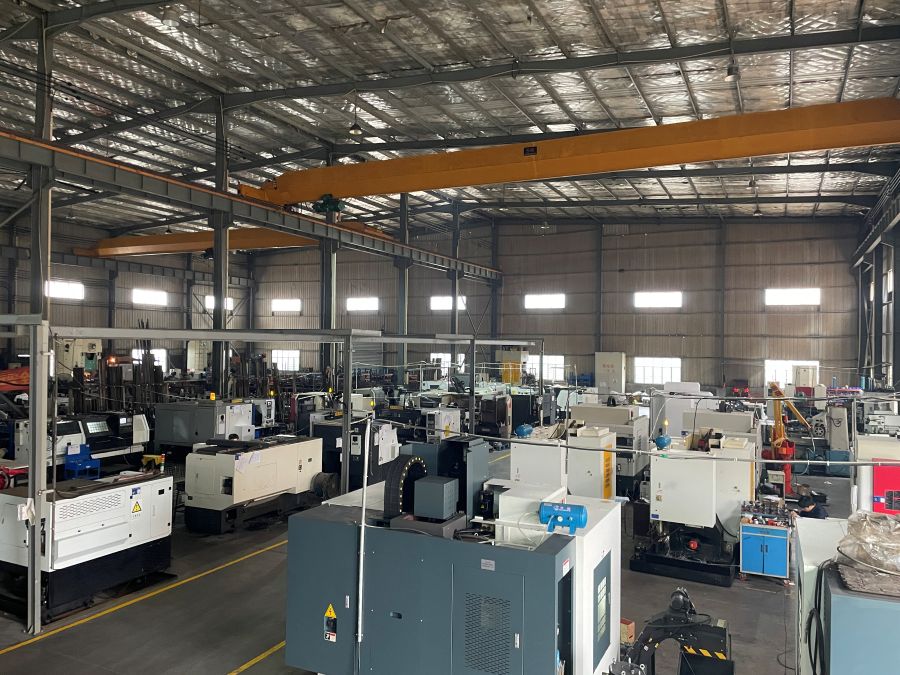
When Is CNC Machining Required?
CNC machining is typically required for tight tolerances, precise datums, bores, threads, complex profiles or controlled surface finishes. Therefore, machining allowance should be planned before forging rather than added after the forged blank is produced.
Why Integrate Forging and Machining?
Using one manufacturing route allows the supplier to coordinate forging stock, heat treatment, machining datums and final inspection from the beginning.
For OEM buyers, this provides three practical benefits:
- Traceability: Heat numbers, forging batches, heat-treatment records and inspection results remain connected.
- Engineering coordination: Drawing changes and machining questions can be handled within one manufacturing system.
- Fewer handoffs: Reducing external transfers improves process continuity from raw material to finished component.
At Weforging, forging, heat-treatment coordination, CNC machining and inspection can be managed within one integrated production route.
What Tolerances Should Buyers Expect?
Buyers should distinguish between as-forged tolerances and the tolerances required on the final machined component.
Forging tolerances depend on part size, geometry, process, die design, material behavior, and cooling. Critical fits and functional surfaces are therefore often produced with machining stock and finished by CNC machining.
Specifying unnecessarily tight tolerances on the forging itself may increase tooling complexity and cost without improving the function of the final part. A better approach is to identify which dimensions must be controlled during forging and which should be achieved during final machining.
What Quality Requirements Should Be Specified?
Quality requirements for custom metal forgings should be defined before production begins. The appropriate inspection scope depends on part function, material, service risk, drawing requirements, and applicable standards. For critical components, buyers should also define the inspection stage and acceptance criteria rather than simply listing the required tests.
Material Traceability
Where traceability is required, material identification should remain linked to the relevant production records. Heat numbers and material certificates provide the basis for tracing a finished component back to its original material batch.
Mechanical Testing
Specify tensile, hardness, impact, or other mechanical tests where required by the drawing or material standard. When these results determine acceptance, the applicable test method, sampling requirements, and acceptance values should also be defined.
Nondestructive Testing (NDT)
When NDT is required, the drawing or specification should identify the method, applicable standard, inspection stage, coverage, and acceptance criteria. For example, ultrasonic testing may be specified for internal discontinuities, while magnetic particle testing is used for surface and near-surface indications in suitable ferromagnetic materials.
Dimensional Inspection
Critical dimensions, datums, tolerances, and GD&T requirements should be verified at the appropriate manufacturing stage. For fully machined forgings, final inspection should confirm that the finished component meets the drawing requirements before shipment.
How Are These Requirements Verified in Production?
Forging vs. Casting vs. Machining: Which Fits the Project?
No manufacturing process is universally better. The correct route depends on component geometry, mechanical requirements, production volume, tooling and finished-part cost.
Factor | Forging | Casting | Machining from stock |
Mechanical performance | Strong for load-bearing applications | Depends on alloy and casting quality | Depends on starting stock |
Complex geometry | Moderate | High | High |
Tooling requirement | Process-dependent | Often required | Usually lower |
Material removal | Moderate | Low | Often higher |
Repeat production | Strong | Strong | Application-dependent |
Therefore, OEM buyers should select the manufacturing route against the finished component requirements rather than the forming process alone.
What Information Is Needed for a Custom Forging RFQ?
A complete RFQ helps a custom forging manufacturer select the production route and quote the required scope accurately. Buyers should define the drawing, material, heat treatment, machining, inspection and delivery requirements whenever possible. If some requirements remain open, the supplier can review them before quotation.
Information to provide | Why it matters |
Drawing / CAD model | Defines geometry, critical features, and finished dimensions |
Material grade and standard | Clarifies material specification and sourcing requirements |
Heat treatment | Defines the required final material condition |
Mechanical properties | Establishes performance and acceptance requirements |
NDT / inspection requirements | Defines inspection method, scope, and acceptance criteria |
Delivery condition | Clarifies as-forged, rough-machined, or fully machined supply |
Machining requirements | Identifies final tolerances, datums, and surface requirements |
Order quantity / annual demand | Influences process selection, tooling, and production planning |
Required documentation | Defines certificates, inspection reports, FAI, PPAP, or other records |
Engineering note: A requirement such as “UT required” may not provide enough information for a critical forging. Where applicable, the RFQ should also define the inspection standard, test stage, coverage, and acceptance criteria.
If some requirements are not yet finalized, a drawing and specification review before quotation can help identify the items that affect manufacturability, inspection, machining scope, and cost.
How Should OEM Buyers Evaluate a Custom Forging Manufacturer?
OEM buyers should evaluate more than forging capacity. For parts that also require heat treatment, CNC machining and inspection, the supplier should be able to control and document the complete manufacturing route from raw material to finished component.
Engineering and DFM Support
A supplier should review the drawing before production and identify requirements that affect forging and machining, including forging allowance, machining datums, heat treatment, critical tolerances and inspection.
At Weforging, drawings are reviewed against the planned manufacturing route so that the forged blank, subsequent machining and inspection requirements are considered together.
Forging-to-Machining Integration
For machined forgings, buyers should check whether forging, heat treatment and CNC machining can be coordinated within one production route.
Weforging integrates forging, heat-treatment coordination, CNC machining and inspection. This helps control machining allowance and critical features while reducing unnecessary handoffs between separate suppliers.
Production and Quality Control
Quality should be verified during production, not only at final inspection.
At Weforging, the operator checks the initial part during production. The first completed component is then independently verified by an inspector. Where required, material and mechanical test results are also confirmed before batch production.
Traceability and Production Records
For repeat OEM orders, buyers should confirm how production records remain connected to each batch.
Weforging can link the material heat number, production batch, heat-treatment records and inspection results. Product identification can also be applied by laser marking when required, providing traceability from the finished component back to its manufacturing records.
Samples Before Series Production
For new custom parts, samples allow both the buyer and manufacturer to verify dimensions, materials and the planned production route before series production.
Once the sample and technical requirements are approved, they can serve as a reference for subsequent controlled production.
For OEM buyers, the key question is not simply whether a supplier can forge the part, but whether it can control and document the process from raw material to finished component.