
Precision Machined Parts: What OEM Buyers Should Consider
By Weforging Technical Team | Updated September 2026
Sourcing precision machined parts involves more than finding a supplier with CNC turning and milling equipment. For OEM projects, material selection, starting stock, heat treatment, machining sequence, critical tolerances and inspection requirements can all affect repeat-production consistency. Therefore, precision should be evaluated across the complete manufacturing route rather than by CNC capability alone.
At Weforging, precision machining can be integrated with forging, heat treatment and inspection. Depending on the drawing, geometry, mechanical requirements and production volume, a component may be machined directly from bar stock or produced from a forged blank before final CNC machining.
This guide explains the manufacturing factors OEM engineers and buyers should evaluate when sourcing precision machined components—from manufacturing-route selection and tolerance control to inspection, traceability and series production.
Key Takeaways
For OEM sourcing, several factors have a greater impact than simply comparing machine specifications:
- Choose the manufacturing route first. A precision machined part may start from bar stock or a forged blank, depending on geometry, material, mechanical requirements and production volume.
- Use tight tolerances where function requires them. OEM drawings should apply tighter tolerances to critical functional features rather than every dimension, since unnecessary precision can increase machining and inspection costs without improving part performance.
- Plan heat treatment and final machining together. Heat-treatment distortion may affect machining allowance and the sequence used to achieve final dimensions.
- Verify the first complete part before series production. First-part inspection helps confirm critical dimensions, the machining process and the inspection method before the full batch is released.
Maintain traceability for repeat production. Material heat numbers, heat-treatment records, production batches and inspection results should remain linked so repeat OEM orders can be traced back to the relevant manufacturing records.
What Defines a Precision Machined Part?
A part does not become a precision component simply because it is manufactured on a CNC machine. Instead, precision depends on whether the specified functional dimensions, geometric relationships and surface requirements can be produced and verified consistently. In practice, precision means repeatable control of the features that affect part function—not simply applying the tightest tolerance to every dimension.
For example, drawing requirements for critical dimensions, mating features and geometric relationships influence tooling, workholding, datum selection and inspection.
Therefore, OEM buyers should look beyond a supplier’s equipment list or stated machining accuracy. The more important question is whether the manufacturer can maintain the required features from prototype and first-part approval through repeat production.
How Does Material Selection Affect Precision Machined Parts?
Material selection affects machinability, tool wear, heat-treatment response, dimensional stability, achievable surface finish and the mechanical properties of the finished component.
Industrial precision machined parts may use carbon steel, alloy steel or stainless steel depending on loading, hardness, toughness, wear, corrosion and heat-treatment requirements. Grades such as C45 and AISI 1045, or 42CrMo4 and AISI 4140, are common examples for steel components, although the specified material should ultimately follow the OEM drawing and application requirements.
However, material should not be considered separately from the manufacturing route. For components that require both controlled mechanical properties and final dimensional accuracy, forging, heat treatment and subsequent CNC machining may need to be planned together.
As a result, OEM material selection should start with the functional and mechanical requirements of the finished component, while machinability and manufacturing cost are evaluated as part of the production route.
Should Precision Machined Parts Start from Bar Stock or a Forged Blank?
Neither bar stock nor a forged blank is the best choice for every precision machined component. The appropriate starting route depends on part geometry, material, mechanical requirements, production volume and manufacturing economics.
Bar stock can be practical for prototypes, lower-volume orders and parts with relatively simple geometry. It may also reduce upfront tooling requirements. However, when a large amount of material must be removed, direct machining can increase material waste and machining time.
A forged blank may be more suitable for certain load-bearing components, near-net-shape geometries and repeat-production programs where mechanical requirements, material utilization and machining allowance need to be considered together.
Factor | Bar Stock + CNC Machining | Forged Blank + CNC Machining |
Prototype / low volume | Often practical | Tooling may be less economical |
Simple geometry | Often practical | Depends on geometry and required blank shape |
Material removal | Can require more stock removal | Near-net shape may reduce machining allowance |
Load-bearing applications | Depends on material, design and treatment | Worth evaluating when forging suits the design |
Mechanical requirements | Depend on material grade and heat treatment | Forging, material and heat treatment can be planned together |
Repeat production | Suitable | Suitable when volume justifies tooling and geometry benefits from forging |
Because Weforging supports both forging and CNC machining, the starting route can be evaluated according to the actual component rather than assuming that every part should be machined directly from bar stock.
For components that start from forged blanks, the relationship between forging and final CNC machining becomes especially important. Learn more about how these processes are combined in Machined Forgings.
Which Tolerances and Critical Features Should Be Defined?
Tighter tolerances are not automatically better. They should be applied where the part’s function requires them, because unnecessary precision can increase machining time, inspection effort and production cost.
Before production, OEM drawings should clearly identify the critical dimensions and functional features that need tighter control, such as:
- Datums and GD&T— define how critical features relate to each other.
- Concentricity or runout, where required— control rotating or aligned features according to the drawing.
- Thread specifications— define size, pitch and tolerance class.
- Mating diameters and surfaces— control fit and assembly with related components.
- Surface roughness— specify functional surfaces where finish affects fit, sealing or wear.
- Critical hole locations and assembly dimensions— control interfaces with mating parts.
Clear drawing requirements help the manufacturer plan machining and inspection around the features that matter most. During drawing review, each tolerance should therefore be linked to a functional need—such as fit, alignment, sealing, rotation or assembly—rather than treating every dimension as equally critical.
Why Does Manufacturing Sequence Matter for Final Accuracy?
Once the starting route has been selected, manufacturing sequence affects how dimensional changes, machining allowance and critical features are controlled before final inspection.
For some industrial steel components, a typical route may look like this:
Raw Material → Forging or Bar-Stock Preparation → Rough Machining → Heat Treatment → Finish CNC Machining → Inspection
Heat treatment can cause dimensional changes. Therefore, manufacturers may need to leave sufficient machining allowance before heat treatment and finish critical dimensions and surfaces afterward. Datum selection and workholding should also account for the condition of the part at each manufacturing stage.
When forging, heat treatment and CNC machining are coordinated within one manufacturing route, machining allowance, process sequence and inspection requirements can be planned together instead of being managed across separate suppliers. At Weforging, these processes can be coordinated according to the component requirements before series production.
When the selected route starts with a forged blank, closed die forging may be used for suitable repeat-production components where part geometry and production volume justify tooling. The forged blank then becomes the starting point for the subsequent heat-treatment and machining sequence.
How Should Precision Machined Parts Be Inspected?
Final inspection alone does not provide enough control for every OEM project. Instead, inspection should combine in-process checks, first-part verification and final inspection according to the drawing and application requirements.
At Weforging, first-part verification follows a staged approach before batch production.
First-Part Verification Before Batch Production
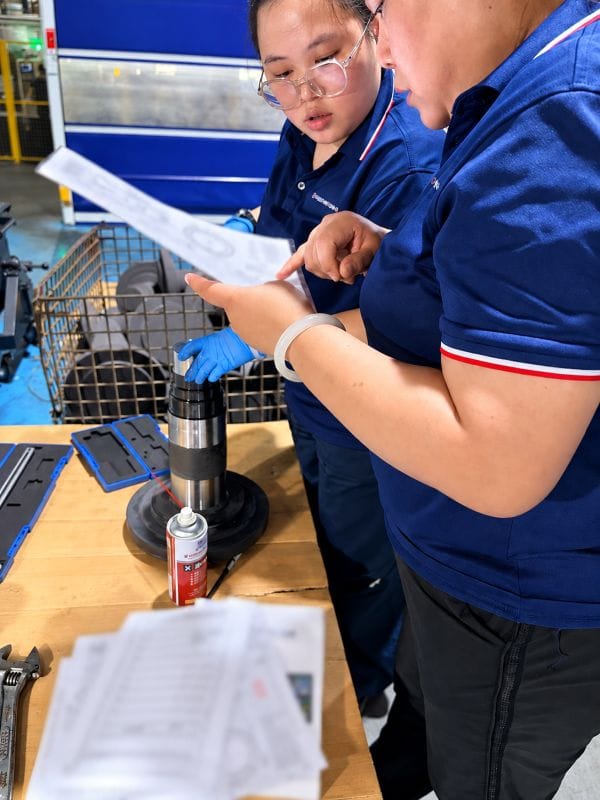
The operator first checks the part during machining. After the first complete component is finished, an inspector independently verifies the specified dimensions and critical features against the drawing and inspection requirements.
If the drawing or application also specifies material, heat-treatment or mechanical-property requirements, the required verification or laboratory testing is completed before the process is released for batch production. This staged first-part verification helps confirm that the machining process, measurement method and finished component meet the defined requirements before repeat production begins.
Inspection Methods Depend on the Drawing and Application
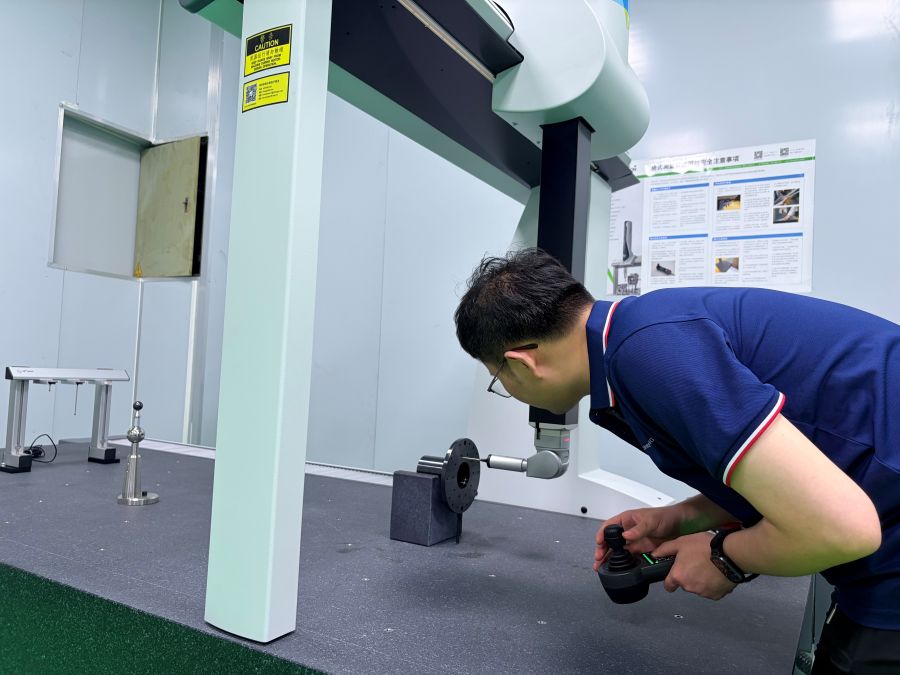
Depending on the component, inspection may include:
- Dimensional and functional inspection:conventional measuring instruments, CMM measurement, and thread or functional gauges.
- Material and heat-treatment verification:material verification or chemical analysis when required, together with hardness testing.
- Mechanical testing when specified:tensile and yield testing, or impact testing where required by the application.
This approach checks more than the finished dimensions. It also helps verify whether the machining method, CNC program and inspection method produce consistent results before series production.
For components with specified mechanical properties, related mechanical testing and tensile testing should remain linked to the material, heat-treatment and production records for the relevant batch.
Why Does Traceability Matter in Repeat Production?
Traceability becomes important when a precision machined component moves from prototype approval into repeat OEM production because each production lot should remain linked to its material, manufacturing and inspection records.
Depending on project requirements, the traceability chain may include:
Material Heat Number → Starting-Material / Forging Batch → Heat-Treatment Record → Machining Batch → Inspection Results → Product Identification
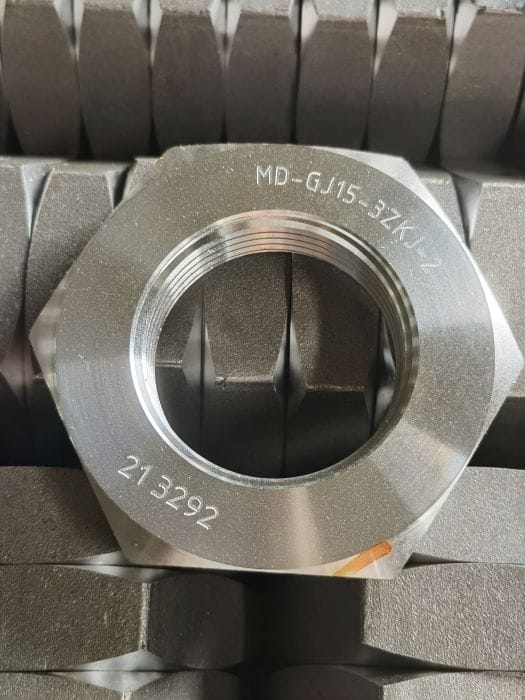
The purpose is not simply to create more documentation. Instead, traceability allows the manufacturer and OEM buyer to identify which material, heat-treatment, machining and inspection records correspond to a specific production lot. Where required, product identification or laser marking can also link the finished component to the relevant production records.
This becomes particularly useful when the same component is supplied across repeat orders or long-term OEM programs. Approved samples, process parameters and inspection results can then provide a controlled technical reference for subsequent batches.
For forged and machined components, maintaining traceability across forging, heat treatment, CNC machining and inspection also reduces the risk of disconnected records between separate manufacturing stages.
What Should OEM Buyers Include in a Precision Machining RFQ?
A precision machining RFQ should define the drawing, material, quantity, critical features, heat-treatment requirements, inspection, surface treatment and delivery expectations needed to evaluate the part before quoting. Clear information reduces unnecessary assumptions during manufacturing-route and process planning.
RFQ Item | Information to Provide |
Drawing | Current 2D drawing and 3D model, if available |
Application | Part function and relevant service conditions |
Material | Material grade and applicable specification |
Quantity | Prototype quantity, batch size and annual demand |
Critical features | Critical tolerances, GD&T, threads, mating features and surface finish |
Heat treatment / properties | Required condition, hardness and mechanical-property requirements |
Inspection | Required inspection methods, gauges, reports or documentation |
Surface treatment | Coating, black oxide or corrosion-protection requirements |
Delivery | Required prototype/sample timing and production delivery schedule |
OEM buyers do not always need to define the starting manufacturing route in advance. When the drawing and application allow more than one option, the supplier can evaluate whether direct bar-stock machining or a forged blank is more appropriate based on geometry, material, mechanical requirements and production volume.
Weforging manufactures custom precision CNC machined parts to OEM drawings and can review the proposed manufacturing route before prototype or series production.
When Does an Integrated Forging and Machining Supplier Make Sense?
Not every precision machined part requires forging. However, an integrated forging and machining supplier becomes more relevant when forging, heat treatment, CNC machining and inspection must be coordinated to meet the final dimensional and mechanical requirements of the component.
An integrated supplier is particularly worth considering when:
- The component requires a forged starting blank followed by CNC machining.
- Heat treatment and final machining must be coordinated to maintain critical dimensions.
- Both mechanical properties and machining accuracy require verification.
- Repeat production requires traceability across material, forging, heat treatment, machining and inspection.
- The OEM wants to reduce technical handoffs between separate process suppliers.
In these situations, one coordinated manufacturing route can reduce technical handoffs and keep material, heat-treatment, machining and inspection records connected to the same production program.
At Weforging, forging, heat treatment, CNC machining and inspection can be coordinated within one manufacturing route when the component requires them. The value of integration is not that every part uses every process, but that the required processes can be selected according to the drawing and managed together from starting material to finished component. This also gives OEM buyers a clearer point of technical coordination when questions arise between manufacturing stages.
Plan Precision Machined Parts Around the Complete Manufacturing Route
Precision machined parts should be planned around the complete manufacturing route rather than evaluated only as a CNC operation. Starting stock, material, heat treatment, machining sequence, critical features, inspection and traceability can all affect whether the finished component consistently meets the drawing requirements.
When a component requires both forged blanks and precision machining, coordinating these processes within one manufacturing route can support mechanical requirements, dimensional control and repeat-production consistency.
Weforging integrates forging, heat treatment, CNC machining and inspection for OEM industrial components manufactured to customer drawings. Send your drawing for a manufacturing-route review before prototype or series production.