Custom Rock Bolt Bearing Plate

Please enable JavaScript in your browser to complete this form.
Click or drag files to this area to upload.You can upload up to 10 files.

Table of Contents

Custom Rock Bolt Bearing Plate | OEM Mining Support Plate

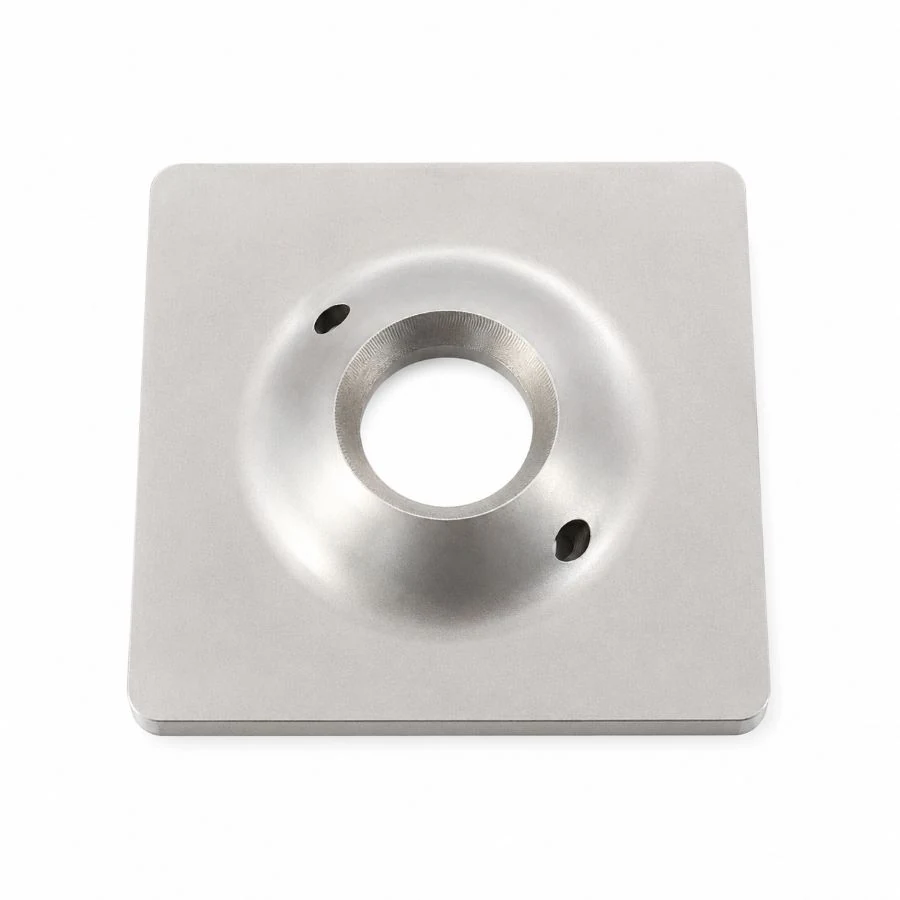
Weforging manufactures custom rock bolt bearing plates for underground mining ground support systems. Installed with a rock bolt, the bearing plate provides a load-transfer interface at the rock surface and is produced to match the specified bolting arrangement.

Each plate is made to the customer’s drawing, with plate size, thickness, center opening, formed profile and additional holes defined for the application. The main geometry is produced by stamping and forming steel plate, with secondary machining used only where required.

What Is a Rock Bolt Bearing Plate?

A rock bolt bearing plate is installed at the exposed rock surface as part of a rock bolting system. It provides a bearing area around the bolt and helps transfer load between the bolting assembly and the supported rock.

The plate works together with the rock bolt, nut or associated seating component rather than as an isolated steel plate. For this reason, the center opening, plate thickness, formed profile and contact area need to match the specified ground support arrangement.

In mining applications, domed or formed bearing plates are commonly used where the plate geometry is designed to work with the bolt assembly and surrounding rock surface.

Custom Bearing Plates Made to OEM Drawings

A mining bearing plate should be specified around the rock bolt assembly and ground support design, not only by its outside dimensions.

Weforging manufactures custom bearing plates from customer drawings and technical specifications. The center opening must match the bolt or seating arrangement, while plate thickness and formed geometry are controlled according to the specified design.

For non-standard projects, additional holes, special profiles and local dimensional requirements can also be incorporated into the manufacturing process.

Specification

What Should Be Defined

Plate size

Length and width

Plate thickness

Nominal thickness and tolerance

Center opening

Diameter, profile and tolerance

Formed profile

Dome, raised or OEM-specific geometry

Additional holes

Diameter, quantity and position

Material

Steel grade or required properties

Surface condition

According to drawing and service requirements

How Are Rock Bolt Bearing Plates Manufactured?

Rock bolt bearing plates are primarily produced from steel plate through cutting, stamping and forming. Depending on the plate geometry and production requirements, the blank can be prepared by laser cutting before the required holes and formed profile are produced during subsequent stamping operations.

For this rock bolt bearing plate, laser cutting is used to prepare the steel blank, followed by stamping to create the required formed geometry. Secondary machining is only introduced where specific features or tolerances require it.

CNC Machining or other secondary machining is used only when the drawing calls for features or tolerances that cannot be achieved efficiently during stamping.

Steel Plate → Blanking → Punching → Forming → Secondary Operations if Required → Inspection

This reflects a broader rule for custom mining components: the manufacturing process should be selected around the part geometry and technical requirements rather than applying the same process to every component.

Actual production process showing laser cutting of the steel blank followed by stamping and forming of a custom rock bolt bearing plate.

Why Does Bearing Plate Geometry Matter?

A bearing plate is more than a flat steel plate with a hole. Its thickness, formed profile, center opening and effective bearing area determine how it interfaces with the rock bolt assembly and supported surface.

For domed or formed plates, the profile is a functional feature. Research on rock bolt bearing plates has shown that changes in plate geometry can affect load resistance and energy absorption.

For OEM production, Weforging therefore follows the approved drawing rather than independently changing the plate profile, hole geometry or other functional dimensions.

Inspection of Rock Bolt Bearing Plates

Underground mining can expose ground support components to demanding conditions, including sub-zero temperatures during winter operation. Where service temperatures may reach −10°C or −20°C, the performance of a rock bolt bearing plate should be considered from the material selection and purchasing stage—not only during final inspection.

For projects with a specified 20°C impact requirement, we select steel with the required low-temperature toughness while also meeting the specified tensile and yield strength requirements. This helps reduce the risk of brittle behavior at low temperatures and ensures that the bearing plate meets the mechanical requirements defined for the ground support application.
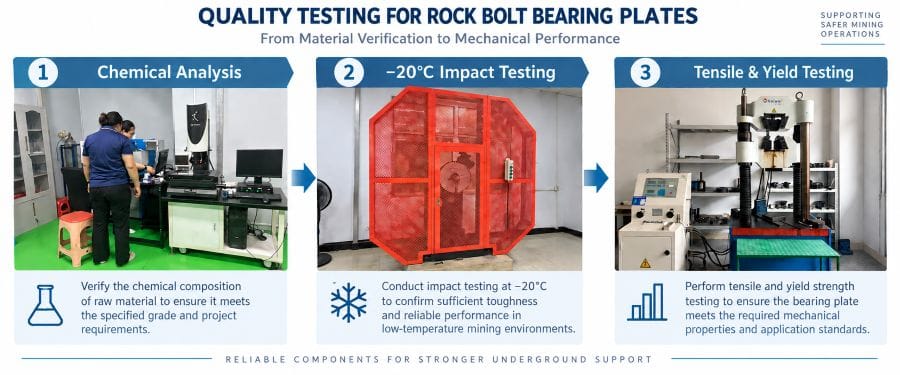
Quality testing for rock bolt bearing plates including chemical analysis, −20°C impact testing, and tensile and yield testing Material verification begins when the steel is received. Samples are checked by chemical analysis, and the measured composition is compared with the material identification and purchasing records. This independently verifies the material grade and links the confirmed material to the corresponding production batch.

After material verification, impact testing at 20°C is performed to confirm low-temperature toughness, while tensile testing and yield testing verifies the specified strength properties. Test results are recorded against the relevant material and production batch, providing traceability from incoming material through mechanical property verification.

From Drawing and Sample to Series Production

For a custom rock bolt bearing plate, production starts with a review of the drawing and the mating requirements. Material, plate thickness, hole geometry, formed profile, critical dimensions and inspection requirements should be confirmed before tooling is finalized.

Samples can then be produced for dimensional and technical verification. For non-standard parts, this step is particularly useful for confirming the formed geometry and its relationship with the mating components.

After approval, the confirmed drawing, tooling and sample provide a controlled reference for repeat production.

Rock Bolt Bearing Plates in Mining Ground Support

In underground mining ground support, a rock bolt bearing plate works with the rock bolt and related fastening components as part of the complete support assembly. Plate geometry and connection details therefore need to match the specified bolt arrangement and OEM design.

Weforging manufactures bearing plates together with anchor heads, hex driver sockets and other custom ground support components to customer drawings. Different parts may require stamping, forging, cold forming or machining depending on their geometry and performance requirements.

For a broader view of these components and their manufacturing routes, see our Custom Mining Ground Support Components page.

Related Mining Ground Support Components

Different ground support components require different manufacturing routes. Weforging supplies Anchor Heads, Hex Driver Sockets, bearing plates and other custom metal parts to OEM drawings.

Depending on the component, production may involve hot die forging, cold forming, stamping, machining from bar stock or CNC finishing. This allows the manufacturing route to be selected around the actual geometry, material and production requirements of each part.

What is a rock bolt bearing plate used for?

A rock bolt bearing plate provides a bearing interface at the rock surface and helps transfer load from the rock bolting assembly into the supported area. It works as part of the complete ground support arrangement rather than as an independent plate.

Are rock bolt bearing plates stamped or machined?

The main plate geometry is typically produced by stamping and forming from steel plate. Secondary machining may be added for specific holes, local features or tighter tolerances when required by the drawing.

Can bearing plate dimensions and hole patterns be customized?

Yes. Plate size, thickness, center opening, formed profile and additional hole patterns can be manufactured according to the OEM drawing and project requirements.

Can samples be supplied before series production?

Yes. Samples can be produced for dimensional and technical verification. Once approved, the sample and confirmed drawing can be used as references for subsequent repeat production.
Scroll to Top