What Is Ring Forging?
Ring forging is a reliable manufacturing process used to produce high-strength, long-life components for industrial equipment. Forged rings—whether used in bearings, flanges, gear rings, or wind-energy and pressure-vessel assemblies—offer higher toughness and fatigue resistance than cast or welded parts. With the growing need for durable components, engineering teams and buyers increasingly rely on ring forging, including rolled ring forging and seamless ring forging, to achieve stable performance under heavy loads and vibration. The process also supports flexible sizes and profiles, making it ideal for customized applications.
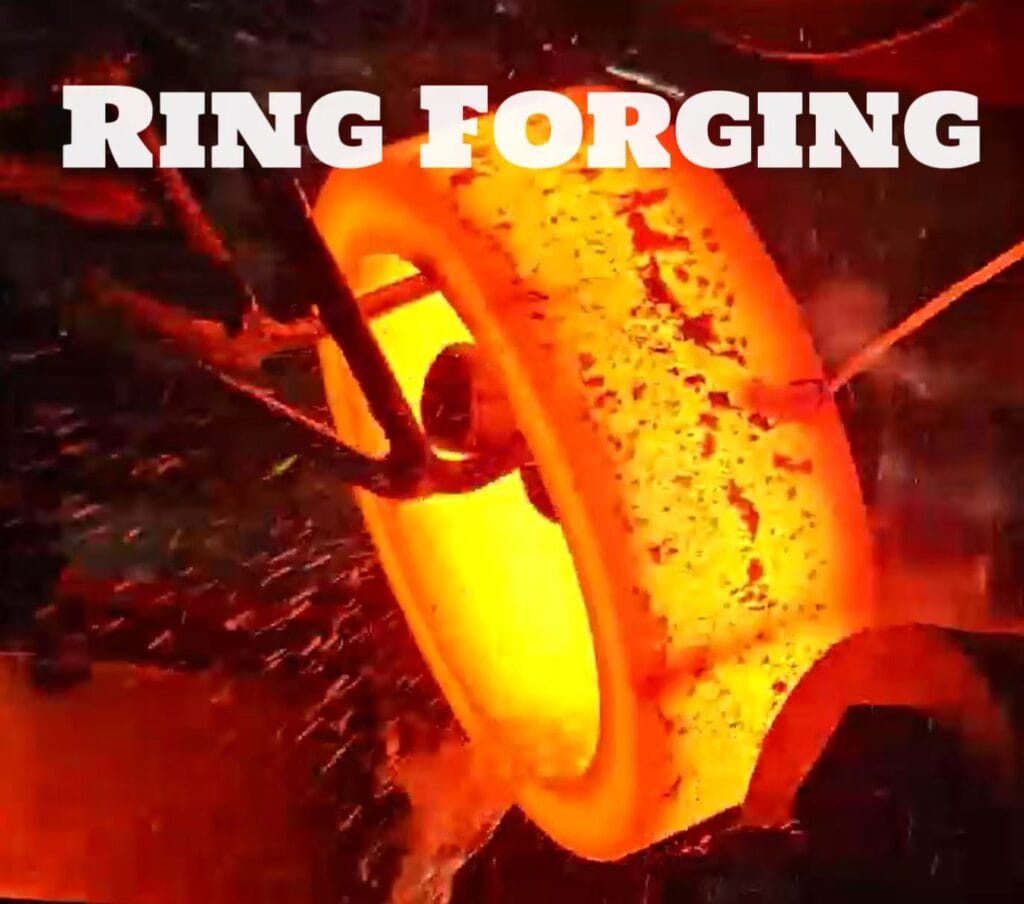
What Is Ring Forging?
Ring forging is a metal-forming process in which a heated billet is pierced and expanded into a ring shape, then shaped by compressive forces. In ring rolling, the ring is continuously compressed and rotated between dies, increasing diameter while reducing thickness.
Two common categories include:
– Rolled ring forging
– Seamless ring forging
Both processes result in rings that are stronger, lighter, and more durable than cast or welded components.
Rolled Ring Forging vs. Seamless Ring Forging
While both methods produce high-quality forged rings, each has unique advantages.
Rolled Ring Forging:
– Suitable for carbon steel, alloy steel, stainless steel
– Used for gear rings, bearing races, flanges, couplings, wind-power components
– Tight dimensional tolerances and excellent material utilization
– Highly stable and repeatable process
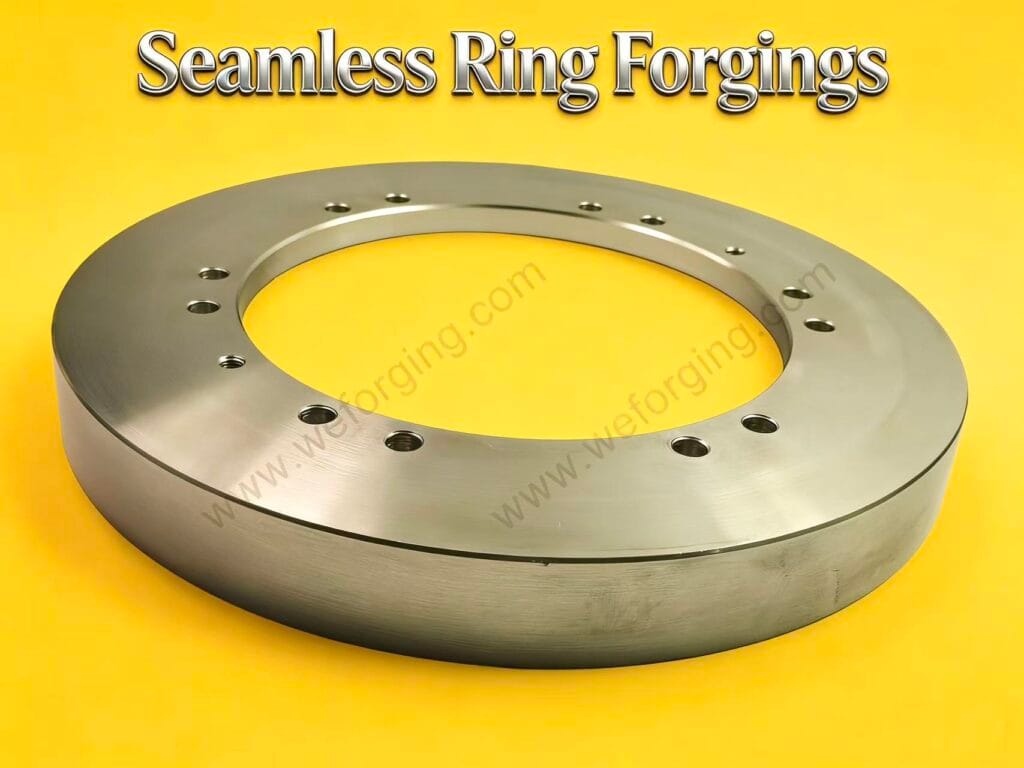
Seamless Ring Forging:
– No welds or joints
– Ideal for pressure vessels, aerospace components, pipelines, large gear blanks
– Withstands extreme internal or external pressure
– Preferred for high fatigue and high-integrity applications
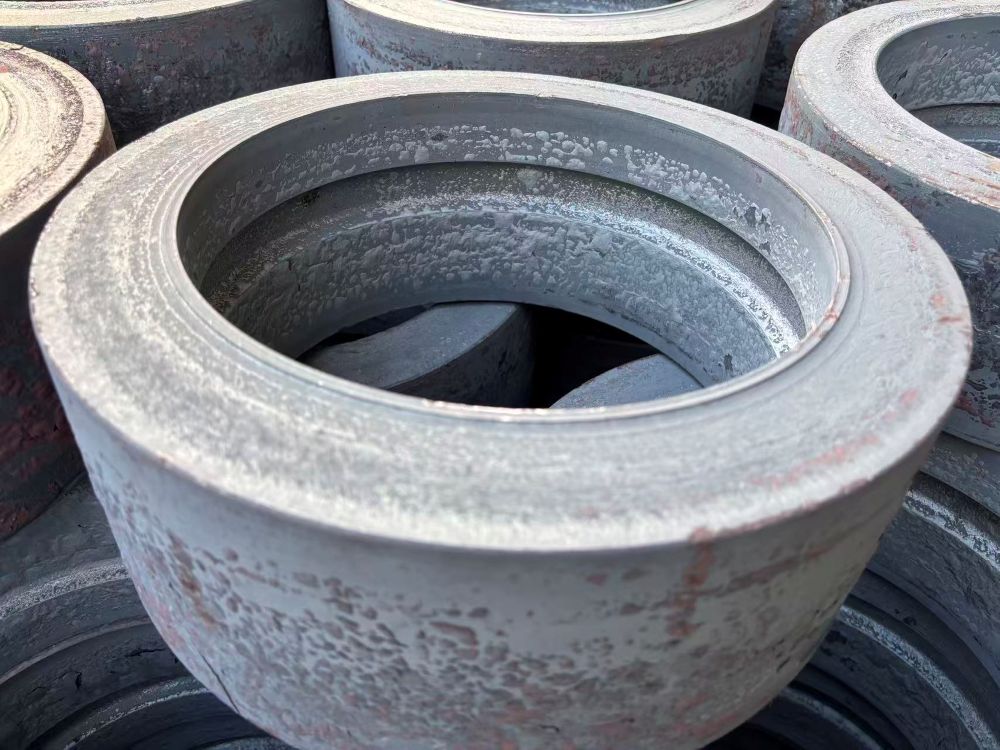
Materials and Mechanical Advantages
Ring forging supports many materials, including carbon steel, 42CrMo, 4140, 8620, SCM440, stainless steels, aerospace alloys, aluminum, and copper.
Forged rings offer:
– Continuous grain flow
– High impact strength
– Superior fatigue resistance
– Improved ductility and toughness
– Ability to withstand extreme shock loads
Rolled Ring Forging Process
A typical rolled ring forging process includes:
- Cutting and heating the billet to forging temperature
- Upsetting the billet to increase cross-section
- Piercing the material to create a ring preform
- Ring rolling between rotating dies
- Heat treatment (quenching, tempering, normalizing, annealing)
- CNC machining of critical dimensions or gear profiles
- NDT and dimensional inspection
This controlled workflow ensures consistent quality, tight tolerances, and excellent mechanical performance.
Common Products Made by Ring Forging
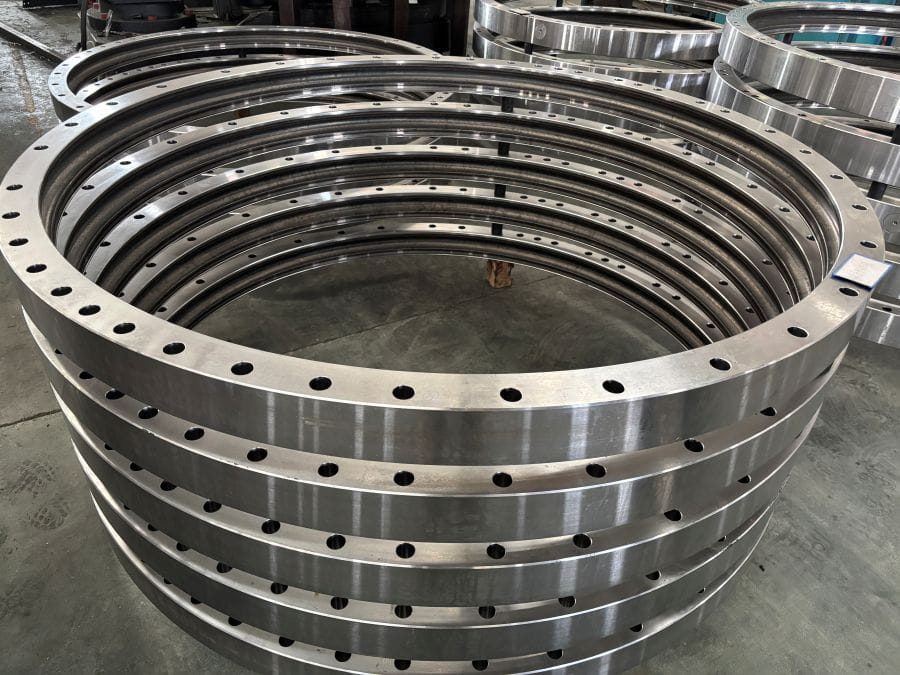
Common components produced through ring forging, including both rolled ring forging and seamless ring forging, cover a wide range of industrial applications. Typical products include bearing rings, gear rings, flanges, couplings, slewing ring blanks, turbine rings, pipe connectors, and pressure-vessel support rings. These forged rings offer excellent structural integrity and fatigue strength, making them ideal for wind-energy systems, mining machinery, transmission equipment, petrochemical installations, and heavy-duty rotating assemblies. Custom ring forgings are also widely supplied to OEM manufacturers who require specific diameters, wall thicknesses, or special alloy materials.
Applications of Forged Rings Across Industries
Forged rings are used in:
Wind Energy:
– Tower flanges
– Slewing bearings
– Main shaft bearing rings
Mining & Construction:
– Large gear rings
– Drive couplings
– Track components
Industrial Machinery:
– Gear systems
– Bearing races
– Custom forged rings
How to Choose the Right Ring Forging Supplier
Key selection criteria include:
- Ability to produce custom ring forging in required sizes and shapes
- In-house forging, heat treatment, CNC machining, and testing
- Experience with special alloys or large-diameter rings
- Certifications such as ISO and EN10204 (3.1 / 3.2)
- Proven track record in OEM and industrial applications
Suppliers with integrated processes offer more reliable quality and shorter lead times.
Conclusion
Ring forging continues to dominate high-performance sectors because it delivers unmatched strength, fatigue life, and structural integrity. Whether you need rolled ring forging, seamless ring forging, or custom forged rings, choosing the right manufacturing partner ensures long-term reliability and optimized performance.
For OEMs, engineering firms, and heavy-industry operators, forged rings remain a dependable foundation for mission-critical components.
If you need forged rings, rolled ring forging, seamless ring forging, or custom ring components for your project, our engineering team is ready to assist.