
Industrial Gearbox Parts: Forged Components & Manufacturing
By Weforging Technical Team | Published October 20, 2026
Industrial gearbox parts include gears, ring gears, pinion shafts, input and output shafts, bearings, housings and sealing components. For gearbox manufacturers, custom gears, ring gears and shafts must withstand demanding loads while meeting specific material, dimensional and assembly requirements. The manufacturing process is therefore critical to reliable power transmission.
For suitable steel components, forging provides the starting blank, followed by heat treatment, CNC machining and gear cutting where required. Coordinating these operations helps control material properties, machining allowances and critical dimensions throughout production.
Weforging manufactures custom forged and machined gearbox components to OEM drawings, supplying gear manufacturers and gearbox builders with forged blanks, rough-machined parts and finished components. This article examines the main industrial gearbox parts, their manufacturing requirements and the considerations involved in sourcing non-standard components.
Key Takeaways
- Component selection: Forged steel blanks are suitable for selected gears, pinion shafts, transmission shafts and ring gears, depending on design and operating requirements.
- Manufacturing control: Machining allowances, critical datums and heat treatment must be considered before gear cutting and final assembly.
- OEM sourcing: Buyers should define the required delivery condition and any machining operations that will remain with their own facility.
Main Industrial Gearbox Parts and Their Functions
Industrial gearboxes contain both power-transmitting components and supporting parts. For gearbox manufacturers, gears, pinion shafts and transmission shafts are among the key custom steel components requiring controlled material properties, machining accuracy and reliable assembly fits.
Component | Main Function | Manufacturing Consideration |
Spur and helical gears | Transmit torque and provide the required speed ratio | Forged blanks, gear cutting and controlled mounting dimensions |
Pinion shafts | Combine gear engagement and shaft functions | Forging, CNC machining, bearing journals and datum control |
Input and output shafts | Transfer torque between connected assemblies | Forged shaft geometry, bearing fits and precision machining |
Ring gears | Transmit torque through internal or external gear teeth | Ring forging, bore and face machining, followed by gear cutting |
Coupling hubs | Connect shafts and transmit torque between assemblies | Custom forging, precision bores and mounting features |
Housings | Support and align internal components | Commonly manufactured through casting and machining |
Bearings and seals | Support rotating shafts and retain lubrication | Specialized purchased components with specified fits and interfaces |
For custom gears and shafts, forging and CNC machining are often planned together to achieve the required material properties, functional dimensions and assembly accuracy. The manufacturing route depends on component geometry, operating loads and production requirements.
Custom Forged and Machined Gearbox Components
Industrial gearbox manufacturers often require non-standard gears and shafts with specific dimensions, materials and mounting features. These requirements influence both the forging design and subsequent machining operations. For custom components, forging and CNC machining should be planned around the finished drawing and the customer’s production requirements.
Forged Gears and Pinion Components
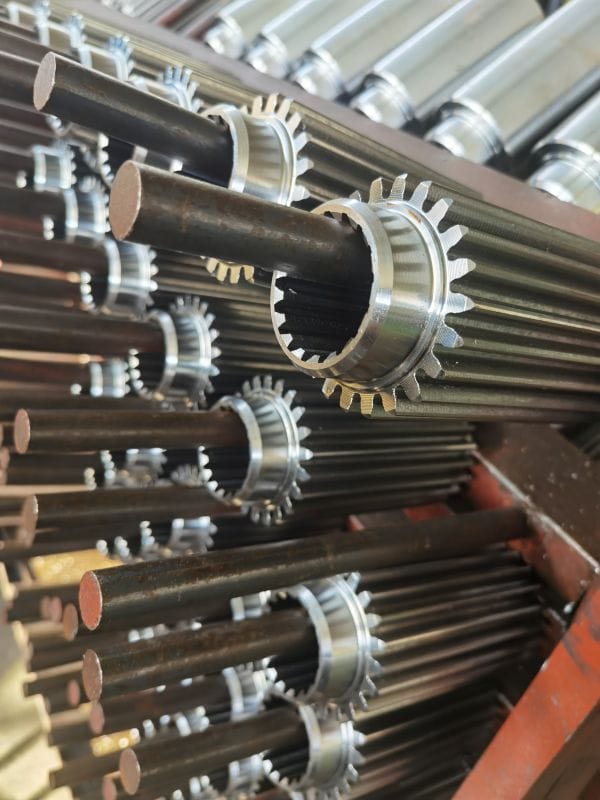
Custom forged gears and pinion components require suitable machining allowances for mounting bores, faces and gear cutting. The forging provides the initial blank, while CNC machining establishes the reference surfaces and dimensions needed for subsequent operations.
For suitable gear and pinion designs, closed die forging can produce shaped blanks closer to the required component geometry, reducing the amount of material removed during subsequent machining.
Gear manufacturers may source as-forged blanks or rough-machined components, depending on their in-house gear cutting capabilities. Defining the delivery condition and machining datums early helps avoid unnecessary rework.
For components with external gear teeth and internal splines, the machining sequence must also account for the relationship between the tooth geometry, internal spline features and locating surfaces.
Gear Shafts and Transmission Shafts
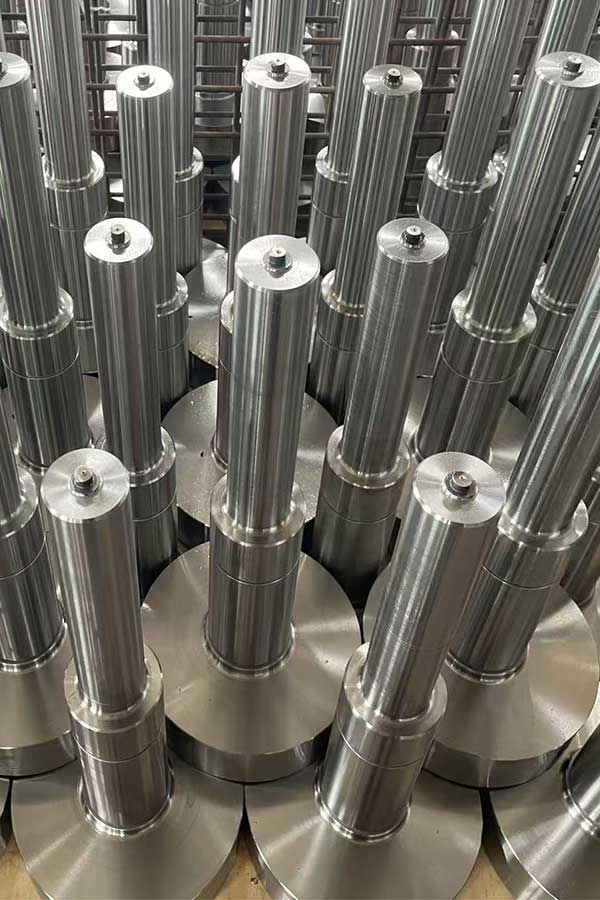
Gear shafts and transmission shafts may include bearing journals, shoulders, splines, keyways and threaded sections. Forging establishes the basic shaft geometry, while CNC turning and milling produce the specified dimensions and functional surfaces.
For integral pinion shafts, the alignment between the gear section and bearing journals is particularly important. During multiple machining setups, consistent datum control helps limit runout errors that could affect subsequent gear cutting and gearbox assembly.
Ring Gears and Custom Forged Rings
Custom ring gears for industrial gearboxes may be produced from closed-die forgings, seamless rolled rings or other suitable forged blanks, depending on component size, geometry and production requirements.
For internal and external ring gears, CNC machining establishes the bores, mounting faces and reference surfaces needed for subsequent gear cutting. Large-diameter components also require careful control of roundness, machining allowances and workholding arrangements.
Weforging can supply forged ring blanks or rough-machined rings to OEM drawings, allowing gear manufacturers to complete internal or external tooth cutting using their own equipment.
Forging and CNC Machining for Gearbox Parts
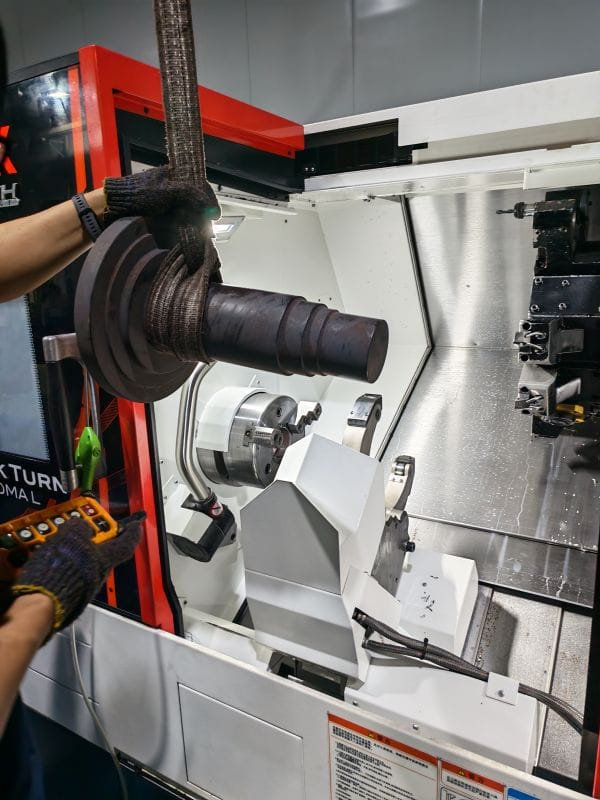
For custom gearbox parts, the manufacturing route should be reviewed against the finished drawing before production. Forging, heat treatment and CNC machining must be coordinated, particularly when components require multiple setups or will undergo further gear cutting at the customer’s facility.
Planning Forgings Around Finished Geometry
The forging design should account for the finished component geometry, machining allowances and surfaces required for subsequent operations. For gear shafts and ring gears, particular attention is needed around bearing journals, mounting faces and bores.
For large gear shafts and other heavy-section components, open die forging may be selected to produce suitable starting blanks for subsequent machining.
Machining stock must accommodate forging variation and expected dimensional changes without excessive material removal. For rough-machined forgings, the delivery dimensions and reference surfaces should be agreed with the gear manufacturer before production.
CNC Machining and Datum Control
CNC machining establishes the functional surfaces and reference features required for subsequent gear cutting and assembly. For gearbox shafts, maintaining the relationship between bearing journals, gear sections and mounting surfaces is particularly important.
When a component requires secondary setups, machinists may use dial indicators to check alignment against the specified datums before machining continues. Consistent datum control helps limit runout and positional errors between related features.
Heat Treatment and Final Machining
Heat treatment is selected according to the steel grade, mechanical properties and finished-part requirements. Its position in the manufacturing route must also account for dimensional changes that may occur during processing.
For gearbox components requiring tight bearing fits or accurate locating surfaces, additional finishing may be necessary after heat treatment. When supplying forged blanks or rough-machined parts to gear manufacturers, the agreed heat-treatment condition and remaining machining stock should match the customer’s subsequent operations.
Critical Machining and Assembly Requirements
What machining requirements matter most for industrial gearbox components? Beyond individual dimensional tolerances, critical requirements include bearing fits, runout, mounting surfaces and the reference features needed for gear cutting and assembly.
Bearing journals and fits: Shaft diameters, roundness and surface finish must meet the specified bearing fit requirements. These features affect bearing installation and the support of rotating components.
Runout and datum relationships: Radial and axial runout must be controlled where specified, particularly between gear sections, bearing journals and mounting surfaces. The applicable geometric tolerances should follow the OEM drawing.
Bores, shoulders and mounting faces: These features establish radial or axial location during assembly. Their dimensions, perpendicularity and positional relationships can affect how gearbox components fit and align.
Ring gear mounting and alignment: For internal and external ring gears, bore dimensions, mounting faces, roundness and specified runout requirements must be controlled to support accurate gear cutting and gearbox assembly.
Preparation for gear cutting: For gear manufacturers purchasing rough-machined forged blanks, the remaining machining stock, reference surfaces and workholding features must support subsequent gear cutting operations.
For custom gearbox parts, dimensional tolerances and geometric tolerances should be evaluated together. Meeting individual dimensions alone does not necessarily ensure that the component will assemble and function as intended.
Quality Verification for Custom Gearbox Components
Quality verification for custom forged and machined gearbox components should cover material requirements, manufacturing processes and critical dimensions specified in the OEM drawing. Inspection is carried out at relevant production stages rather than relying solely on the final check.
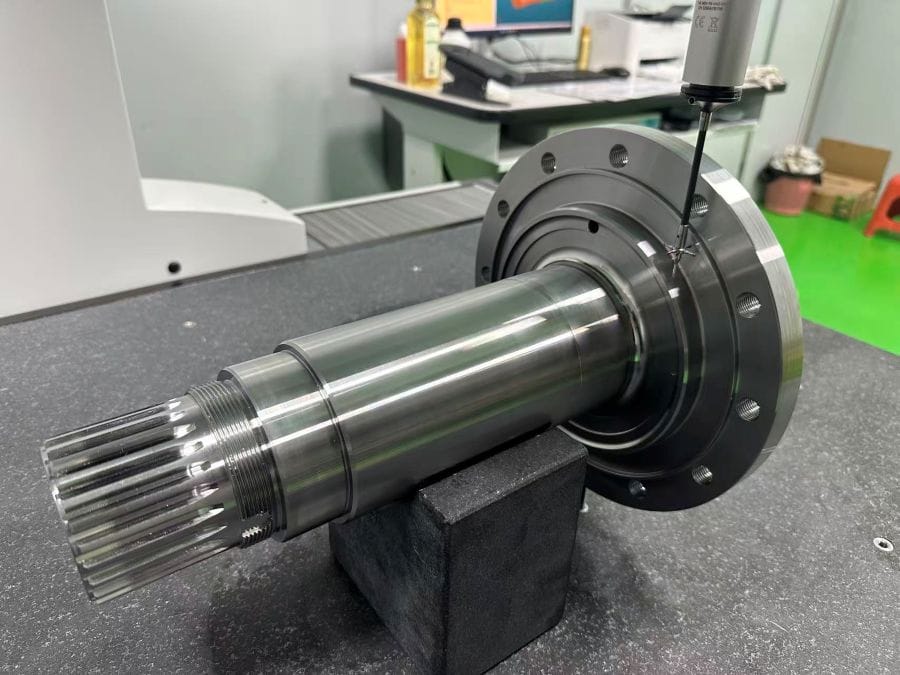
During machining, operators check critical features on the first part and monitor dimensions as production continues. Once the first complete component is finished, an independent inspection can verify bearing journals, mounting bores, runout and other specified geometric tolerances using suitable measuring instruments or a coordinate measuring machine (CMM).
For repeat OEM production, first-part verification helps confirm the machining process before batch manufacturing proceeds. Material heat numbers, production batches, heat treatment records and inspection results can be linked according to project traceability requirements.
The objective is to identify manufacturing deviations early and maintain consistent quality for subsequent gear cutting, gearbox assembly and repeat orders.
The following video shows CMM inspection of a machined gear shaft at Weforging. Measurements of runout, coaxiality and other specified geometric features help verify the relationship between critical shaft surfaces against OEM drawing requirements.
Supplying Custom Gearbox Parts to OEM Manufacturers
Gear and gearbox manufacturers may require different delivery conditions depending on their in-house machining capabilities. Weforging supplies custom gears and shafts, ring gear blanks and other forged gearbox components to OEM drawings, as forged blanks, rough-machined parts or finished components according to the agreed production scope.
For gear manufacturers performing their own gear cutting, rough-machined forgings can be supplied with specified reference surfaces and machining allowances. For gearbox OEMs requiring components ready for assembly, the manufacturing scope may also include heat treatment, precision machining and inspection.
When requesting a quotation, buyers should provide the component drawing, material specification, required delivery condition, critical tolerances and estimated order quantity. Where further gear cutting is planned, machining datums and remaining stock should also be confirmed.
Defining which operations are completed by Weforging and which remain with the customer helps coordinate inspection requirements, production schedules and subsequent manufacturing.
Custom Forged and Machined Parts for Your Gearbox Production
For gear manufacturers and industrial gearbox OEMs, the right manufacturing route begins with the component drawing and its intended operating conditions.
Weforging supplies custom forged blanks and machined steel components, with manufacturing and inspection planned around customer specifications.
Send us your drawings, material requirements and estimated quantities to discuss a suitable forging and machining solution for your gearbox project.